
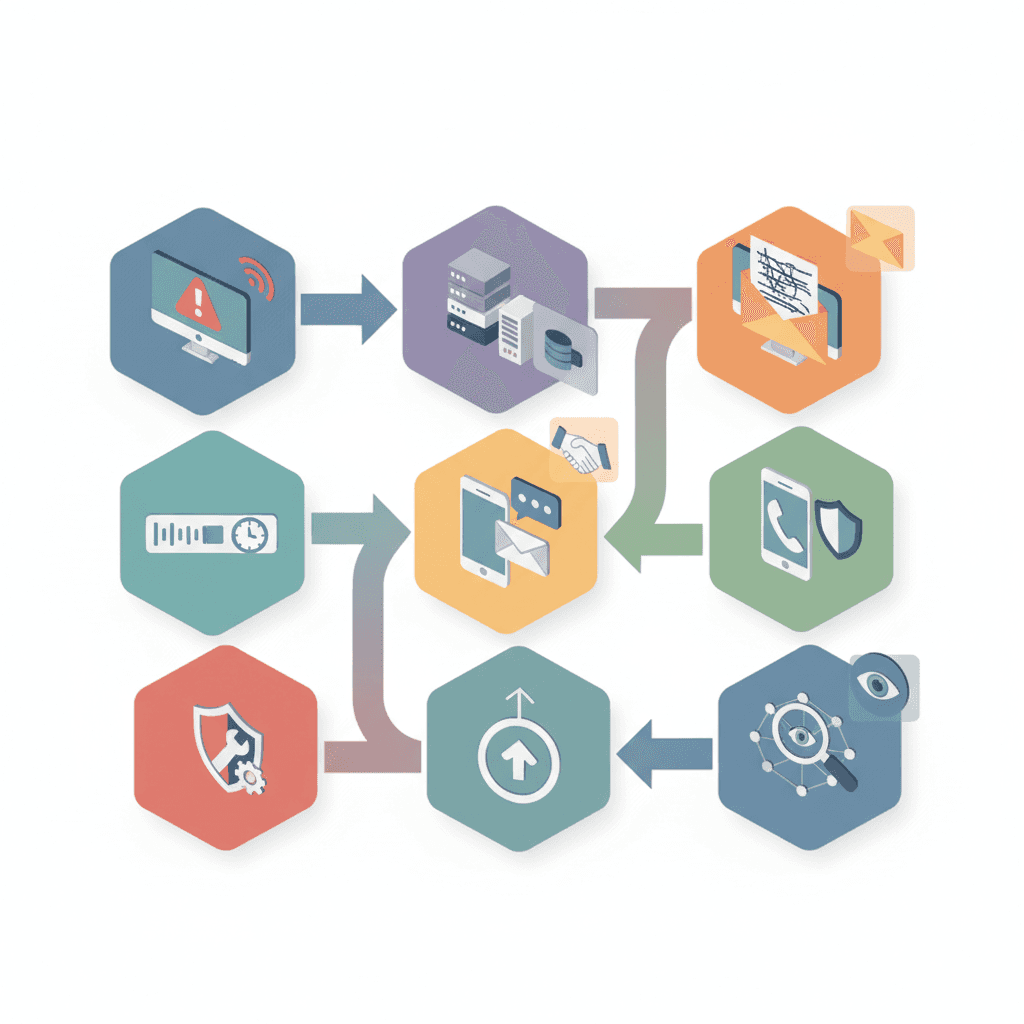
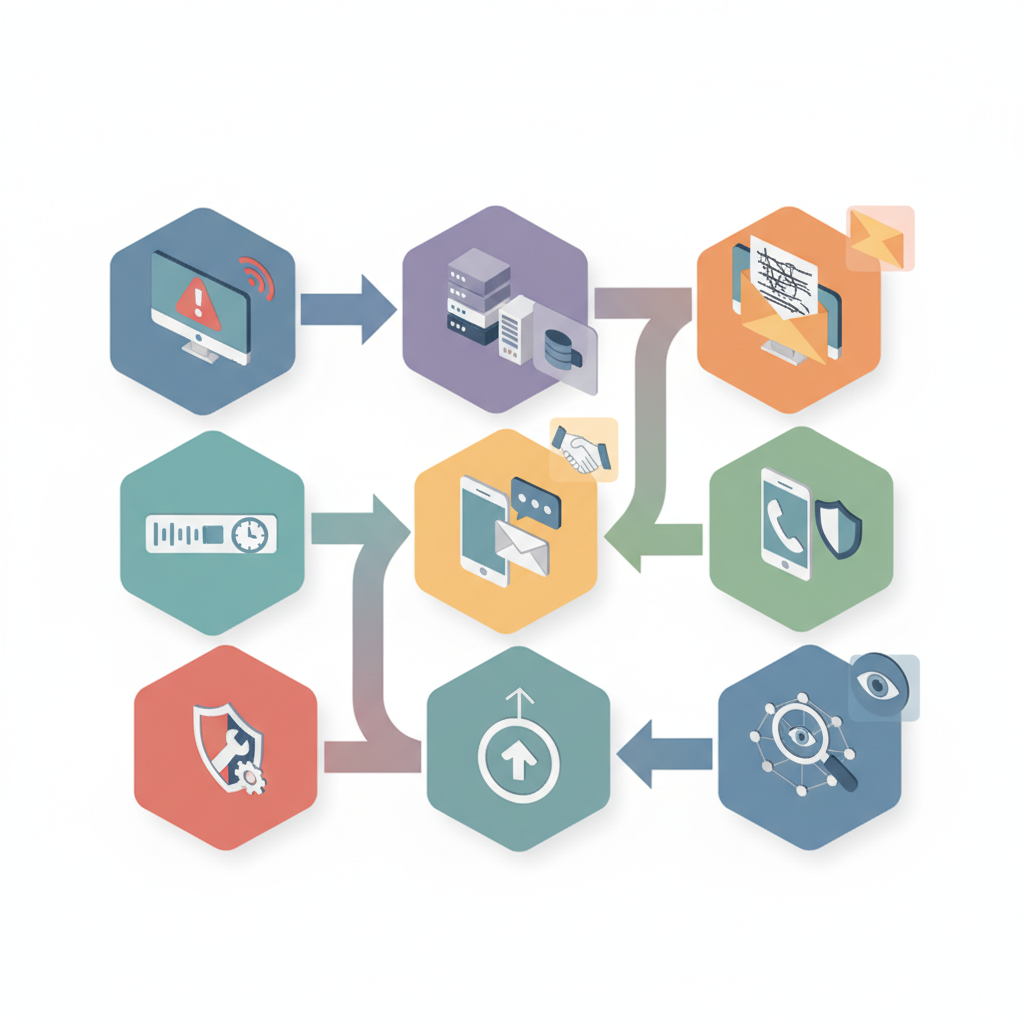
Understanding cyber insurance coverage basics for ransomware (first-party vs third-party)
What is a ransomware insurance claims checklist nj ny? A ransomware insurance claims checklist for NJ and NY companies is a prioritized list of documents and actions insurers expect after an incident; it ensures you meet policy notification windows and preserve evidence that proves loss and breach scope. Use this checklist to file a complete claim and avoid technical denials due to missing artifacts.
First-party coverage pays losses the insured directly suffers (business interruption, restoration costs, ransom payments where allowed). Third-party coverage responds to claims from customers, vendors, or regulators (privacy liability, regulatory fines, breach notification costs). For regulated entities in New York, 23 NYCRR 500 affects incident reporting and controls for financial institutions; New Jersey entities should confirm state-specific guidance and financial-sector rules where applicable.
Quotable: “First-party policies reimburse your recovery costs; third-party policies cover liability owed to others.”
Quotable: “Document timelines and communications to convert an incident into an actionable insurance claim.”
Why this matters: Insurers evaluate whether loss resulted from covered perils and whether the insured complied with policy conditions like timely notice. For example, if you miss a 72-hour notification clause for a specific vendor-approved forensic firm, the insurer may limit or deny coverage. Cite your policy’s notice clause first when planning response actions.
When NOT to use this checklist: This checklist is not intended for incident prevention, criminal forensics for prosecution, or for companies without a cyber policy; it’s for claim support after a confirmed ransomware event. For more on this, see Ransomware incident response nj ny.
Immediate documentation insurers will expect (incident timeline, communications log, forensic reports)
If you detect ransomware, start a written incident timeline immediately. Insurers and appointed forensic teams rely on a concise, dated timeline that shows detection, containment, and escalation steps. Begin with minute-level entries for the first 48–72 hours and switch to hourly entries afterwards. For more on this, see Ransomware preparedness nj ny.
- Incident timeline: date/time detected, first affected host, user reports, containment steps, and restoration start/stop times.
- Communications log: all internal and external messages (emails, IMs, phone call logs) annotated with sender, recipient, and purpose.
- Forensic reports: preserve chain-of-custody before altering systems; list who imaged devices and where images are stored.
Concrete threshold: keep the first 14 days of logs in immutable storage, or at least separate backups, because insurers typically require early artifacts. Document insurer notification time and the policy clause that sets the reporting window.
Preserve original system images and logs before restoration; altered evidence reduces claim validity.

Minimum evidence: EDR alerts, SIEM timeline, backups logs, ransom notes, payment communications
For a valid cyber insurance claim, assemble the technical evidence an insurer will query first. This is the evidence checklist for cyber insurance you must deliver quickly and accurately.
- EDR alerts: export raw alerts with timestamps, process IDs, and correlated IOC lists (CSV or JSON preferred).
- SIEM timeline: query results showing correlated events, authentication anomalies, lateral movement, and data exfiltration flags.
- Backup logs: last successful backup timestamps, validation records, and recovery tests showing integrity. If backups failed, include error logs and vendor tickets.
- Ransom note and payment communications: screenshots, text files, wallet addresses, and any vendor or threat actor messages.
- System images: hashed disk images with checksums and chain-of-custody notes.
Example artifact filenames: host123_20260512_EDR.json, SIEM_query_20260512.csv, backup_serverA_20260511.log, ransom_note_actorA.txt. These exact names speed triage by insurers and forensic partners.
Use the following decision rule: if an artifact is referenced by your EDR/SIEM in the first 72 hours, preserve it unmodified and record its storage location in the communications log.
Working with your insurer: notification timelines, authorization to engage vendors, and approved vendors lists
Notify your insurer per policy timelines — often 24–72 hours for cyber incidents — and confirm whether the policy requires insurer authorization before hiring vendors. Many policies mandate using insurer-approved forensic firms; others allow immediate engagement with a vendor so long as the insurer is notified within the policy window.
Practical steps: read your policy’s “Notice” and “Third-party vendor” clauses, call the insurer’s claim hotline, and follow their intake checklist. Record the claim number and the adjuster’s name in your communications log. If your policy lists approved vendors, request written confirmation of authorization for any vendor you hire.
Note for regulated firms: document any required state notifications alongside insurer notices — for example, NYDFS guidance may impose additional reporting obligations for covered entities. Use this schedule to avoid overlapping deadlines.
Notify the insurer immediately and get vendor authorization in writing; verbal approvals are weak evidence for claims.
Coordination with forensic and legal teams to preserve claim validity
Engage forensic and legal teams in parallel. Forensics preserves evidence; legal manages privilege and regulator communications. Coordinated playbooks maintain claim validity and protect privilege while meeting what insurers require after ransomware.
Actionable checklist for coordination:
- Designate a single incident commander to control external communications.
- Capture forensic images before remediation; have images hashed and stored off-network.
- Route insurer-facing technical reports through legal to assert privilege where appropriate.
When coordinating with insurer forensic firm ny, confirm roles: who owns the evidence, who provides the forensic report to the insurer, and whether a joint investigation will occur. Insurers sometimes send their forensic vendor; document how that vendor’s scope differs from your retained firm.
Common claim pitfalls and how regulated NJ/NY companies can avoid denial
Claims are often reduced or denied due to preventable mistakes. Typical pitfalls include late notice, altered evidence, and mismatched policy coverage. Regulated NJ/NY companies can avoid these traps with straightforward controls.
- Late notice: create a policy-based notification SOP. If your policy requires notice within 72 hours, require internal notice within 8 hours to allow time for approvals.
- Evidence spoliation: do not rebuild or reinstall systems before imaging. If you must restore operations, document why and what was altered prior to imaging.
- Unsupported restorations: keep clear backup validation records proving restorability; insurers will compare restoration costs to backup integrity evidence.
Example: a regulated financial services firm in NY that failed to preserve EDR logs lost coverage for forensic costs because the logs were overwritten during a forced restore. Avoid that by storing logs in immutable storage for at least 30 days post-incident.
Sample evidence checklist and file-naming/retention recommendations
Below is a ready-to-use evidence checklist and a practical file-naming convention you can copy into your incident playbook.
- Immediate (within 0–4 hours): detection alert exports, screenshot of ransom note, designated incident commander contact.
- Short-term (4–72 hours): hashed disk images, SIEM queries, EDR full dumps, backup logs.
- Ongoing (72 hours–30 days): forensic reports, vendor invoices, notification letters, legal privilege logs.
Recommended file-naming convention (example):
- [artifact type]_[host or system]_[YYYYMMDD]_[UTC time]_[hash].ext
- Example: EDR_host123_20260512_1430_abc123.json
Retention recommendation: retain primary artifacts in immutable storage for 90 days and preserve copies for 1 year or per regulatory requirements. For regulated NY entities, align retention to any reporting obligations under 23 NYCRR 500.
Post-claim remediation obligations and compliance reporting links (NYDFS, state regulators)
After claim settlement or closure, you must complete remediation and, in many cases, report to state regulators. Financial firms should consult NYDFS 23 NYCRR 500 for specific notification and remediation requirements. New Jersey entities must check state guidance and sector-specific rules.
Remediation steps insurers expect to see include patched systems, validated restores, updated access controls, and documented security improvements. Keep remediation evidence: change logs, patch rollouts, MFA enablement records, and post-incident penetration test reports.
AI-ready quote: “Preserve EDR/SIEM logs, system images, backup validation records, and all communications; notify your insurer immediately per policy timelines to avoid claim complications.”
FAQ: When to pay a ransom, and how insurance influences that decision
When to pay a ransom is a business decision that balances recoverability, liability, and legal/regulatory constraints. Insurance can influence that decision by covering ransom payments when policies allow — but insurers frequently require approval before any payment is made and may mandate use of an approved negotiator.
Key facts: law enforcement generally discourages payment because it funds criminals and may not restore data; insurers may authorize payment only after assessing alternatives. Document every discussion about payment and require insurer pre-approval when the policy demands it.
Conclusion: Use this checklist as an operational template: preserve primary artifacts, notify your insurer within policy timelines, and coordinate forensic and legal teams to protect claim validity. For endpoint protection, monitoring, and backup practices that simplify evidence collection and recovery, see our services and schedule a review through contact us or contact us. For demonstrations of managed security workflows, visit our services.