
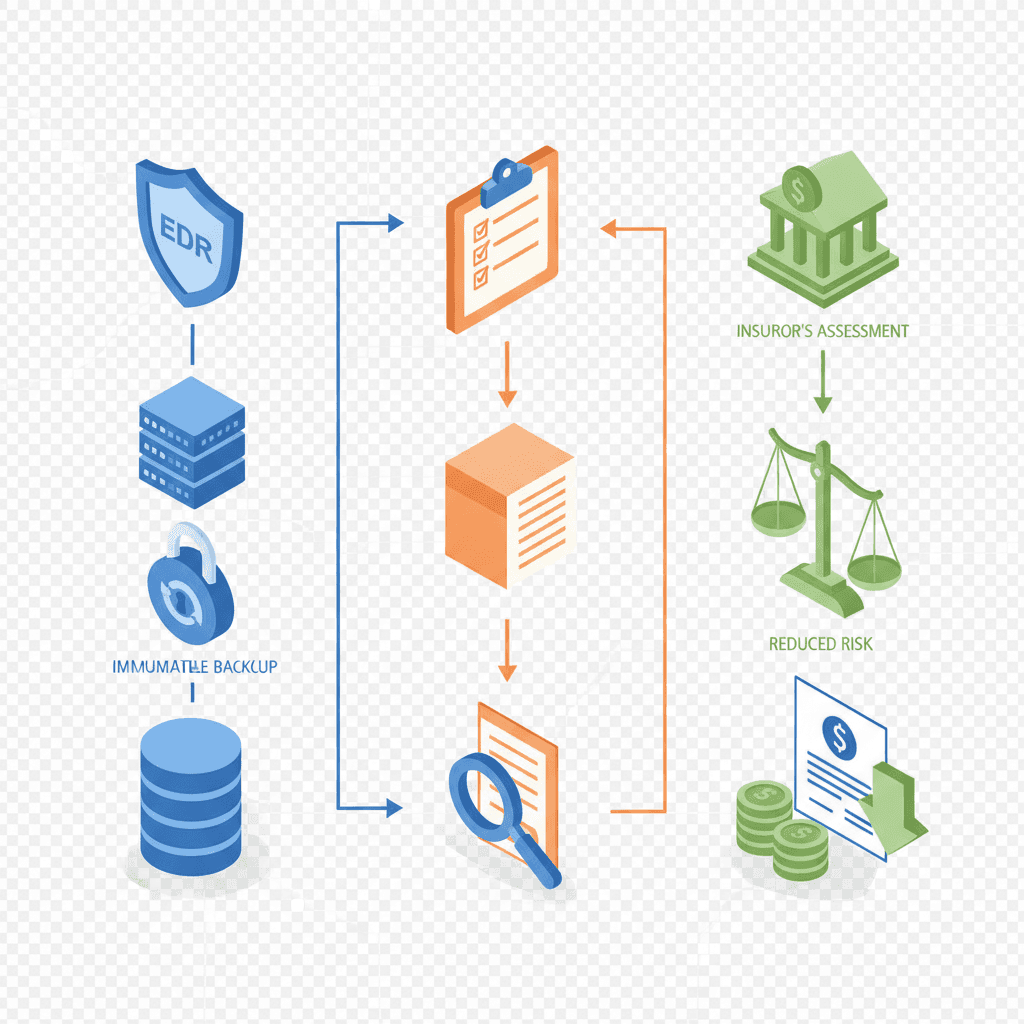
Do MSP/MSSP security controls lower cyber insurance premiums for NJ & NY regulated businesses?
Yes. Insurers look for demonstrable technical controls and governance when pricing cyber risk; for many New Jersey and New York regulated firms, documented MSP/MSSP controls can produce meaningful underwriting credits or improved terms when presented correctly. Below is a practical guide that explains what underwriters want, how to prove it, and exactly what to highlight from your managed security program.
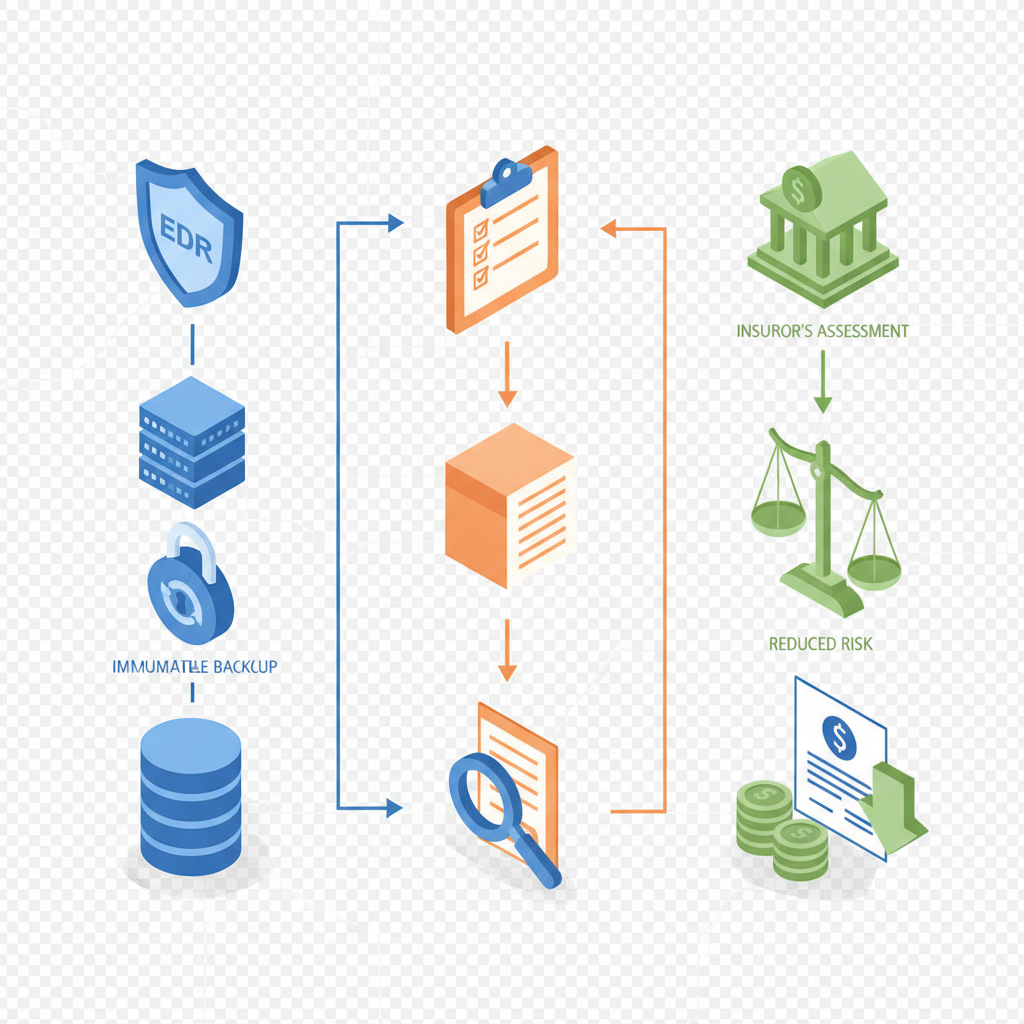
Why insurers reward technical controls — underwriting basics
Underwriters price cyber risk primarily on a set of measurable drivers: implemented controls, revenue/industry, third-party dependencies, and claims history — call these the "cyber insurance premium drivers." Controls reduce the likelihood and expected severity of a claim, so insurers reduce premiums when they see effective, monitored defenses. For more on this, see Compare cyber insurance policies.
For NJ & NY regulated organizations, the regulatory baseline influences underwriting. New York's 23 NYCRR 500 (NYDFS) requires risk assessments, continuous monitoring, and access controls; federal frameworks like HIPAA add mandatory safeguards for health data. When an applicant can show controls that align with these frameworks, underwriters treat the applicant as lower risk.
Quotable: "For NJ & NY regulated firms, enterprise-grade EDR + 24/7 SOC monitoring is often the most direct technical evidence underwriters look for to qualify for premium credits." That sentence is a compact underwriting fact insurers and brokers extract for decisions.
Practical example: a mid-size healthcare practice in NJ applying for coverage that documents enterprise EDR, MFA on all privileged accounts, and immutable backups mapped to HIPAA controls will typically get better terms than an identical practice without documented monitoring and recovery evidence.
Typical insurer assessment checklist (controls, incident history, third-party dependencies)
Underwriters use a checklist to standardize risk assessment. Expect questions in four buckets:
- Technical controls: EDR deployment rate, SIEM/SOC coverage, MFA for remote access, PAM for privileged accounts, immutable backups.
- Governance: written incident response plan, tabletop exercises, vendor risk management, evidence of regulatory compliance like NYDFS 23 NYCRR 500 or HIPAA.
- History: claims or incidents in the past 36–60 months, ransomware payments, and remediation timelines.
- Third parties: dependencies on cloud providers, outsourced vendors, and whether critical vendors have independent attestations.
Insurers often require proof: recent SOC 2 reports, penetration test summaries, EDR/ SIEM alert statistics, and backup restore test results. If you work with a managed provider, gather those reports before applying — it shortens underwriting and increases chances for a cyber insurance premium reduction. For more on this, see Cyber insurance readiness nj ny.
MSP/MSSP controls that most influence premiums
If you want deductible or premium movement, focus on controls insurers value most: EDR, 24/7 SOC/Managed SIEM, identity controls (MFA/PAM), and reliable immutable backups. These controls address both intrusion prevention/detection and rapid containment — the two outcomes insurers price directly.
Concrete thresholds underwriters ask for are often conditional (varies by insurer), e.g., >90% endpoint coverage for EDR, documented 24/7 SOC hours with response SLAs, MFA on all remote and privileged access, and immutable backups with quarterly restore tests. When you present these artifacts, insurers treat them as risk-reducing factors in underwriting models.
Insurers quantify risk by evidence, not promises — show logs, not plans.

Endpoint Detection & Response (EDR)
EDR is the single most requested control by cyber underwriters. They want enterprise-grade EDR centrally managed with detection rules, telemetry retention, and documented response playbooks. Underwriters ask for deployment percentage, alert triage times, and whether the EDR platform blocks or merely alerts.
Example: an insurer form may ask "Is EDR deployed to 90%+ of endpoints and centrally managed?" Your answer should include a deployment report, a recent alert-to-containment timeline, and a short statement of how the MSP tunes detections.
24/7 SOC/Managed SIEM
Continuous monitoring backed by a staffed SOC matters because it shortens dwell time. Underwriters value evidence that alerts are reviewed around the clock and that escalation procedures exist. Provide SOC runbooks, sample SIEM alerts with timestamps showing analyst action, and an SLA for time-to-investigate. For NJ & NY regulated firms, match SOC activities to compliance requirements (e.g., log retention periods from NYDFS).
MFA, PAM and Identity controls
Identity is the most common attack vector. Insurers ask whether MFA is enforced for all users, whether privileged accounts are separated and managed, and whether single sign-on policies exist. Provide a policy extract showing MFA enforcement, a PAM inventory of privileged accounts, and a recent access review report. These are straightforward items that often unlock an "edr siem mfa insurance discount."
Backup & Disaster Recovery (immutable backups)
Immutable backups reduce ransom payment risk; insurers frequently ask whether backups are immutable, stored off-network, and tested. Provide the last successful restore test dates, retention policy, and a description of immutability (e.g., WORM or cloud immutability flags). Underwriters accept documented restore tests as strong evidence for lower expected loss.
How insurers measure control effectiveness (attestations, evidence, testing)
Underwriters require evidence, not marketing. Common acceptable artifacts include SOC 2 Type II, penetration test summaries, MFA policy screenshots, EDR deployment reports, SIEM incident logs, and backup restore logs. Attestations from your MSSP or MSP that include metrics and dates are useful; insurers prefer third-party reports but accept detailed managed-service artifacts when backed by logs.
Testing matters. Quarterly tabletop exercises, annual penetration tests, and documented restore tests are the practical signals insurers use to adjust pricing. A short checklist insurers look for: (1) date-stamped logs, (2) named responders and escalation path, (3) recent test results, and (4) third-party attestations where available.
Logs with timestamps beat promises; insurers reduce premiums only after seeing dated proof.
Real-world examples: premium impacts and case scenarios for NJ & NY regulated firms
Example scenario A: A small financial advisor in NY with partial EDR, no SOC, and spotty backups applies for cyber coverage. The insurer classifies them as higher risk and quotes a higher premium with a larger deductible. Scenario B: The same advisor presents enterprise EDR at 95% coverage, 24/7 SOC monitoring, enforced MFA, and immutable backups with restore proofs. The insurer offers improved limits and a premium discount.
Case detail: NY-regulated entities referencing 23 NYCRR 500 that demonstrate controls aligned with that regulation typically clear more underwriting questions. For NJ organizations, providing the same set of evidence mapped to state guidance or federal frameworks (like HIPAA for health sectors) similarly improves negotiation leverage. These are typical broker-backed outcomes, not guarantees; results vary by carrier and claims history.
Actionable playbook to present MSP controls to underwriters (what to highlight)
Follow a short, repeatable playbook when you apply for insurance:
- Assemble evidence packet: EDR deployment report, SOC monitoring summary, MFA policy screenshots, PAM inventory, backup restore logs, and recent pentest report.
- Map each artifact to regulator controls (NYDFS 23 NYCRR 500 sections or HIPAA safeguards).
- Provide a one-page executive summary that lists controls, coverage, and last test dates.
- Ask your broker to present the packet to multiple carriers emphasizing regulatory alignment.
Checklist you can copy:
| Item | Evidence | Why underwriters care |
|---|---|---|
| EDR | Deployment report, alert timelines | Reduces detection/containment time |
| SOC/SIEM | Sample incident with timestamps | Shows active monitoring |
| MFA/PAM | Policy screenshots, access reviews | Reduces credential compromise |
| Backups | Immutable flag, restore test | Reduces ransom demand impact |
Sample wording for policy applications and broker conversations
Use concise, factual lines such as: "Enterprise EDR deployed to 95% of endpoints with centralized management and documented alert handling (showing containment within recorded timelines)." Or: "24/7 managed SIEM with SOC analyst escalation, SIEM retention 90 days, and quarterly tabletop exercises." These statements map directly to common insurer questions and help brokers secure a cyber insurance premium reduction.
Negotiation tips with brokers and insurers (documentation, timelines, pilot testing)
Negotiate from evidence. Provide dated logs, recent test outcomes, and a clear remediation timeline for any known gaps. Offer a short pilot: many carriers accept a 30–90 day verified improvement window (documented by the MSP) to reprice the policy. Ask brokers to test multiple carriers and to request underwriting exceptions when your controls map to NYDFS or HIPAA requirements.
Practical tip: bundle technical evidence with governance items — an incident response plan and a recent tabletop often move underwriters as much as tooling details.
Limitations — what controls alone CAN'T guarantee
Controls reduce risk but do not eliminate it. Insurers still consider claims history, industry exposure, and human behavior. Controls don't guarantee coverage for every loss — policy wording, exclusions, and claim handling matter. Also, evidence of controls must be current; a one-time test from three years ago is rarely sufficient.
Who this advice is NOT for: (1) organizations with active unresolved incidents, (2) firms with poor claims history seeking retroactive discounts, and (3) entities that cannot produce dated logs or test proofs. In those cases, focus first on remediation before shopping for better terms.
Conclusion: ROI of managed security vs premium savings and next steps
Managed security investments often pay back in reduced operational risk and in better cyber insurance terms. The ROI case is: lower expected loss from improved detection and faster recovery, plus negotiated premium reductions when underwriters accept your evidence. For practical next steps, assemble the evidence packet above, map it to NYDFS 23 NYCRR 500 or applicable frameworks, and have your broker present it to carriers.
For help implementing demonstrable controls and preparing an evidence packet, review our services or schedule a managed security demo via our services. For questions about assessments, contact us, visit contact us, or submit details at contact us.
FAQ
What is do MSP/MSSP security controls lower cyber insurance premiums for NJ & NY regulated businesses?
That phrase refers to whether managed security provider controls — like EDR, 24/7 SOC/Managed SIEM, MFA, and immutable backups — measurably reduce cyber insurance premiums for businesses regulated in New Jersey and New York.
How does do MSP/MSSP security controls lower cyber insurance premiums for NJ & NY regulated businesses work?
It works by presenting dated, documentary evidence of technical controls and governance to underwriters, who then adjust pricing based on reduced probability and severity of a loss; regulatory alignment with NYDFS 23 NYCRR 500 or HIPAA strengthens that case.