

TL;DR
- Cost depends on scope: users, devices, backup, security, and response SLAs.
- Common billing models: per-user, per-device, flat-fee, and a la carte add-ons.
- Request a written quote and an inventory-driven assessment before committing.

What you need to know
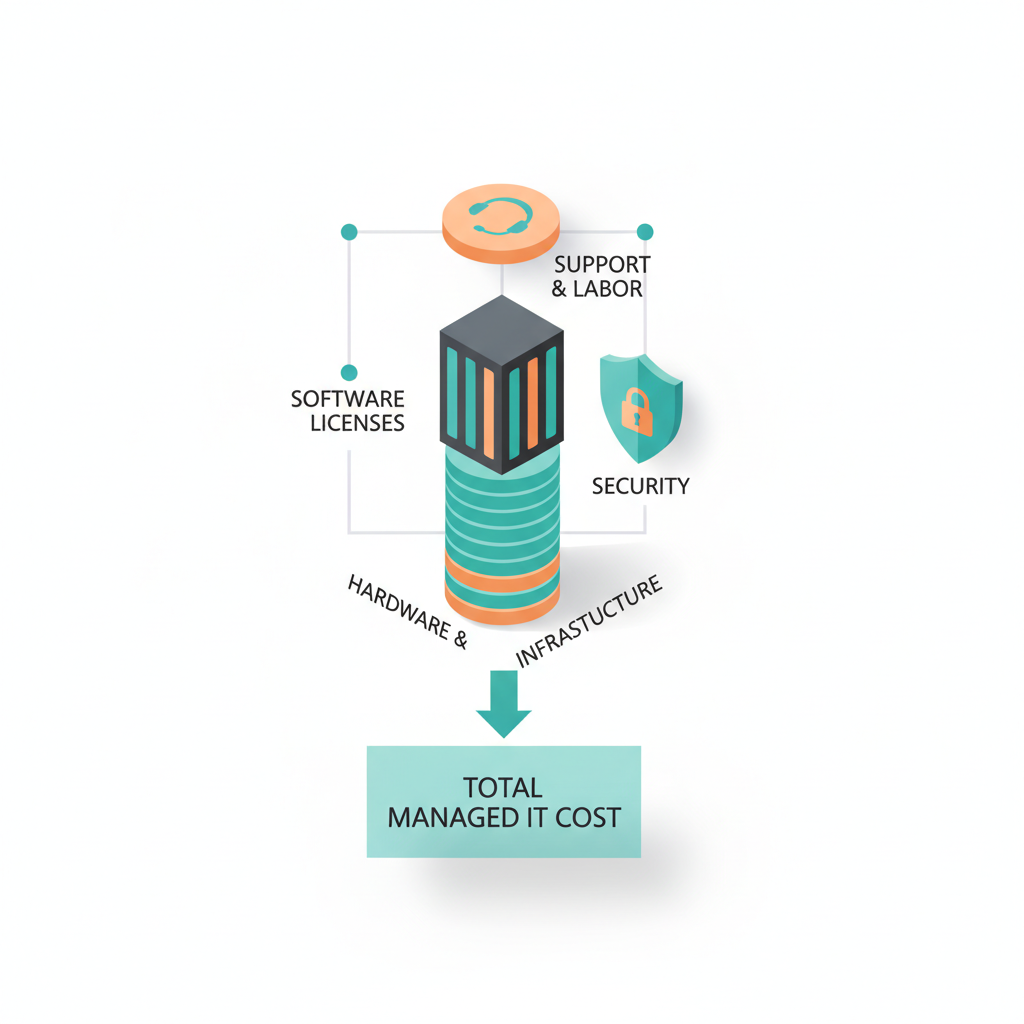
Cost of managed IT services varies because you're buying a bundle of capabilities, not a single item. Those capabilities include 24/7 monitoring, senior-engineer-led support, enterprise-grade backup and disaster recovery, and cybersecurity like endpoint detection and response or threat hunting. The mix you pick drives price more than any headline hourly rate.
Quotable: Managed IT pricing reflects the number of protected users and the depth of security you require.
Think of managed IT as a subscription for a technology operations team. You pay to transfer responsibility for routine operations, incident response, and strategic upgrades. For regulated or fast-growing businesses, the value often comes from predictable monthly costs and access to senior engineers rather than the cheapest hourly rate, which is why understanding IT and cybersecurity solutions is essential.
Deciding factors that determine cost include:
- Headcount and device counts (desktops, laptops, mobile, servers).
- Backup and disaster recovery capacity: cloud storage and recovery testing.
- Security services: EDR, SIEM, zero-trust policies, and active threat hunting.
- Response SLA and whether support is 24/7 with senior-engineer involvement.
- Compliance requirements and third-party integrations.
How it works
This section explains how providers translate scope into a price. Pricing usually follows one of four models: per-user, per-device, flat-fee per site, or a hybrid that mixes base coverage with add-on services. Each model maps differently to your needs; choose the one that aligns with how you scale, especially in light of the top cybersecurity trends every business should know.
Quotable: A pricing model should make growth predictable — not surprise payroll or capital planning.
Step-by-step process a provider uses to produce a proposal:
- Inventory: count users, devices, servers, and cloud workloads.
- Risk assessment: identify compliance gaps and security gaps that need immediate attention.
- Service definition: list included services (monitoring, backup, EDR, SIEM, threat hunting) and excluded items.
- Choose billing model: per-user, per-device, flat-fee, or hybrid based on inventory and support needs.
- Quote and SLA: present a written quote with response times, escalation path, and performance commitments.
Use the following decision rule when evaluating proposals: if the vendor can deliver senior-engineer-led support, enterprise-grade backup, and continuous security monitoring within a single monthly fee that matches your risk tolerance, the value typically outweighs managing those functions in-house.
Note on managed services pricing: ask vendors for a line-by-line cost breakdown and for examples of similar-sized clients. Industry reports (see Datto 2025 State of the MSP and Kaseya 2025 MSP benchmark) document trends in service bundles and packaging.
Best practices
Start with these practical steps to control cost and get the services you need.
- Run an inventory-based assessment before requesting quotes: provide device counts and a short list of critical apps.
- Define must-have services versus optional add-ons (for example: required EDR and SIEM, optional advanced threat hunting).
- Require a written SLA with response and escalation details, and include backup verification frequency.
- Ask for transition and onboarding costs separately so you can compare recurring fees cleanly.
- Compare total cost of ownership: vendor subscription plus your internal coordination time versus in-house staffing costs.
Common mistakes to avoid:
- Choosing the cheapest per-user rate without verifying what’s excluded.
- Ignoring backup verification and disaster recovery testing in the proposal.
- Failing to confirm senior-engineer involvement for escalations and architecture reviews.
Quick checklist to prepare for quotes:
- List of users and devices by location
- Inventory of critical servers and cloud services
- Compliance or regulation requirements
- Current pain points and desired SLAs
Quotable: Always compare proposals on included outcomes, not just price per user.
FAQ
How Much Do Managed IT Services Cost?
Answer: The cost of managed IT services depends on scope and the chosen pricing model; typical proposals are based on user/device counts plus add-ons for backup, enterprise security, and guaranteed response SLAs. Request an inventory-driven assessment and a written quote that lists included services, excluded items, onboarding fees, and the response SLA before deciding.
References
- DATTO — 2025 State of the MSP Report
- Kaseya — 2025 Global MSP Benchmark Report Highlights
- ConnectWise — Service Leadership Q2 Data Report
- TSIA — Mastering Managed Services Pricing
- KPMG — Transformation insights