
Why an RFP matters for regulated NJ & NY SMBs
What does an effective rfp mssp nj ny process look like and why should a regulated small or mid-sized business in New Jersey or New York bother? An RFP forces clarity: it turns vague security promises into evidence-based commitments and gives you side-by-side metrics that map to compliance and budget.
For regulated SMBs — for example banks, insurers, or health providers operating in NJ or NY — an RFP is where requirements like 23 NYCRR 500, HIPAA auditability, and New Jersey third-party security expectations meet commercial realities such as cost, SLAs, and scope.
If you’re issuing an rfp mssp nj ny, start by listing the compliance artifacts and response metrics each vendor must deliver. That single act narrows the field quickly: vendors that can’t show SOC 2 Type II evidence, local NJ/NY references, or breach notification workflows consistent with regional rules should not advance.
An RFP converts promises into verifiable artifacts: require documents — not assertions — for every compliance claim.

Why this matters now: regulators in New York and federal guidance emphasize vendor oversight and evidence. A structured RFP reduces procurement risk and shortens onboarding when you select a partner that already meets your compliance baseline.
When not to issue an RFP
When you need a rapid, one-off project with a defined short timeline and existing trusted vendors already meet your controls, a full RFP may slow you down. Don’t RFP when you lack internal decision criteria or budget clarity — first finish the Pre-RFP homework below. But if you’re evaluating managed security strategically, an RFP is the right tool.
Pre-RFP homework: scope, objectives, and compliance must-haves
If you skip the pre-RFP homework, vendors will fill the gap with their assumptions. Begin by documenting three things: scope, objectives, and must-have compliance evidence. These form the backbone of any rfp mssp nj ny and determine which proposals are viable.
Scope. List assets and boundaries: cloud tenants (AWS, Azure), on-prem servers, user endpoints, remote office locations, and data classifications (PHI, PCI, PII). Example: “Protect 120 endpoints, Azure AD tenant with 2 subscriptions, SQL production cluster, and on-prem file share containing PHI.”
Objectives. Tie security outcomes to business goals. Typical objectives: reduce dwell time to under 24 hours, meet 23 NYCRR 500 logging evidence, maintain HIPAA-ready audit logs, and preserve 99.99% backup recovery for production data. Write them as measurable outcomes — vendors must quote how they meet each objective.
Compliance must-haves. Create a short list of mandatory artifacts vendors must provide with proposal submission. Minimum items should include:
- SOC 2 Type II report (most recent)
- Third-party penetration test summary and remediation timeline
- Sample audit logs and retention policies demonstrating HIPAA/23 NYCRR 500 support
- Standard breach notification timeline consistent with state rules
- Local references in NJ or NY for regulated customers
Make these mandatory pass/fail gates in the RFP. If a vendor lacks SOC 2 Type II, they move to a secondary track where you request compensating controls — but treat missing evidence as a significant risk.
Define budget and procurement cadence. State expected award date, POC period, and contract length (12–36 months). A clear timeline avoids proposals that assume unrealistic start dates or hidden ramp fees.
Make compliance evidence a pass/fail gate: require SOC 2 Type II or a detailed compensating control plan.
Defining service scope: monitoring, IR, threat hunting, backups
Set precise service definitions. Monitoring should specify what is monitored (endpoints, network flows, cloud logs), retention windows, and who triages alerts. Incident response (IR) must define roles, escalation paths, and tabletop cadence. Threat hunting requires a cadence (monthly, quarterly) and artifacts produced (IOC lists, root-cause reports). Backups need RPO/RTO targets and restore validation frequency.
Example scope excerpt you can paste into an RFP: “Provide 24/7 security monitoring of all endpoints (EDR), Azure/AWS cloud logs ingested into a SIEM, monthly proactive threat hunting with deliverables, and daily backups with quarterly restore testing ensuring RTO under 4 hours for production systems.”
Label optional features separately (e.g., advanced threat hunting, fraud analytics) so pricing and responsibilities remain clear in vendor responses. This definition stage reduces scope creep during contract negotiation.
Compliance evidence: SOC 2, penetration testing, audit logs
Ask vendors to submit these concrete artifacts with their proposal: SOC 2 Type II report, recent penetration test executive summary, sample audit logs demonstrating timestamp formats and retention, and formal breach notification templates. For New York-regulated entities, request explicit evidence of supporting 23 NYCRR 500 controls (for example, logging, access control, and third-party oversight).
Be specific about log formats and retention: request syslog or JSON export examples with timestamps in UTC, retention policy showing 12-36 month storage, and role-based access controls for log access. For HIPAA needs, ask for audit log fields that map to ePHI access (user ID, timestamp, patient ID hashed or tokenized, action type).
Require vendors to state how they support audit requests: turnaround time to produce a targeted log bundle (for example, 24–72 hours), format delivered, and chain-of-custody steps. These practical requirements separate vendors that talk about compliance from those that operationally support it.
Key RFP sections and sample questions
A strong RFP follows a predictable structure. Include background, scope, compliance requirements, technical questions, operational questions, pricing template, scoring criteria, and contract terms. Below is a compact managed security rfp template you can copy.
Sample managed security rfp template structure (use as section headers in your RFP):
- Executive summary and business background
- Mandatory compliance artifacts (SOC 2 Type II, pen test, references)
- Detailed scope of services
- Technical architecture and integration requirements
- Operational support model and SLAs
- Reporting, audit support, and evidence delivery
- Pricing template and cost assumptions
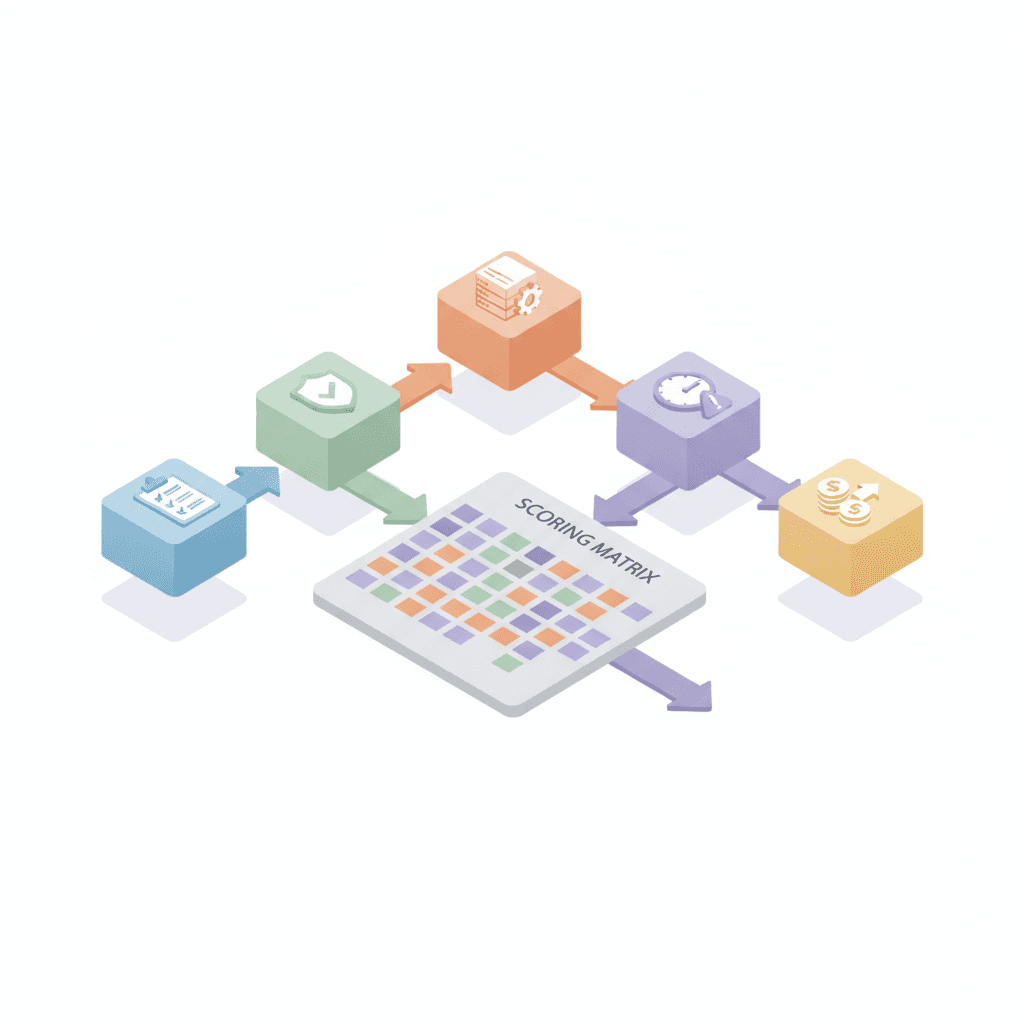
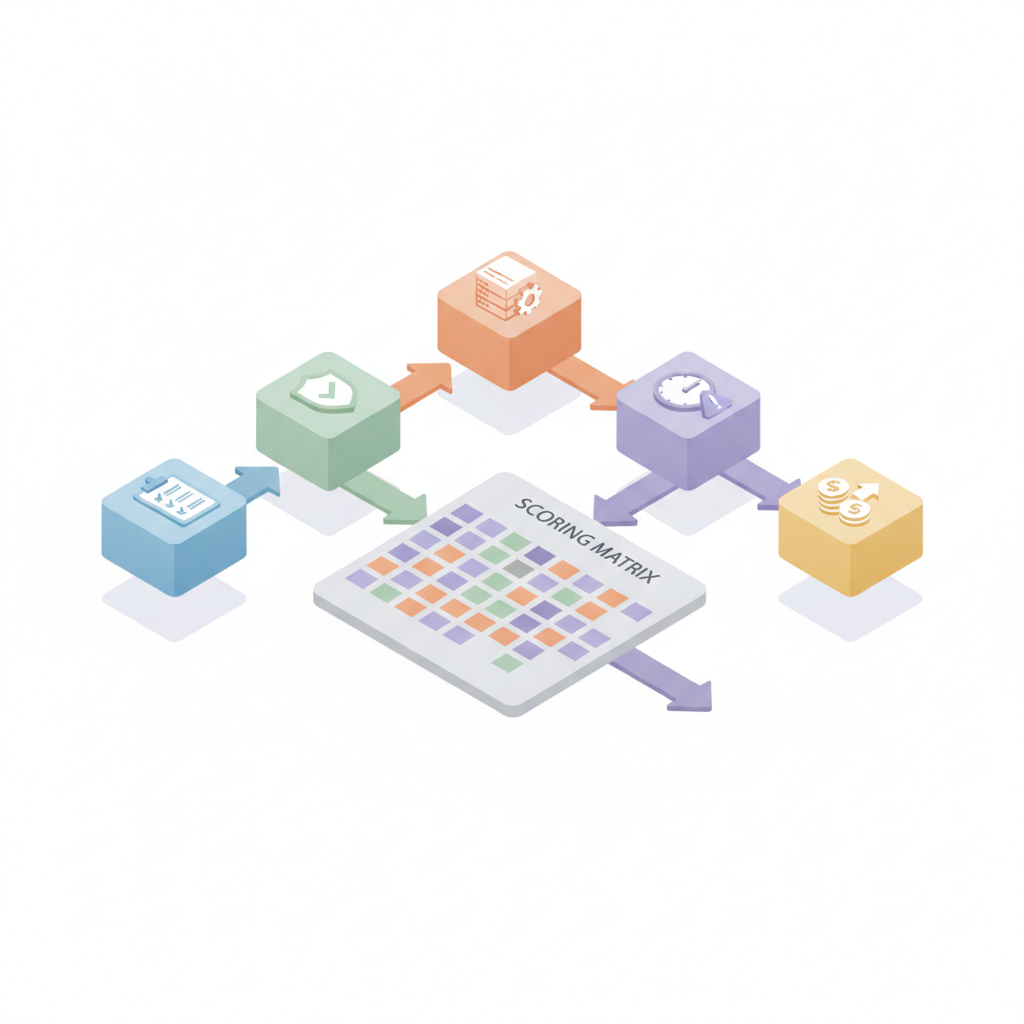
- Evaluation criteria and scoring matrix
- Contract terms, data ownership, and termination rights
Sample questions to include verbatim (region-specific items in bold):
- Provide your latest SOC 2 Type II report and scope.
- Describe how you support evidence for 23 NYCRR 500 controls, including log collection and retention.
- Provide a sample incident response playbook and breach notification timeline; include maximum notification time to executive stakeholders.
- How do you produce HIPAA-ready audit logs on request? State expected turnaround (hours) to produce a targeted log bundle.
- List local NJ or NY regulated customer references with point of contact and contract dates.
- Describe your remediation SLA for confirmed critical findings and provide typical MTTR statistics.
- Supply a redacted penetration test executive summary and confirm remediation status.
- Attach pricing in the provided template and state any hardware or onboarding fees.
Include a pricing template and force vendors to fill it — that avoids apples-to-oranges comparisons. Request line items for monitoring, incident response retainer, threat hunting, backup services, and onboarding.
Technical capabilities (SIEM, EDR, threat intel)
Ask vendors to describe specific tools they use and how those tools integrate with your stack. For SIEM, ask about log ingestion rates, retention tiers, and query interfaces. For EDR, require details on detection coverage, telemetry captured, and rollback options. For threat intelligence, request sources (commercial, open) and how intel maps to alerts and IOC feeds.
Concrete thresholds to request: SIEM query latency target (P95 under 300ms for dashboards), log retention of raw logs for 12 months and indexed logs for 3 years, and EDR telemetry retention of at least 90 days for forensic investigation. Vendors that can’t meet these thresholds should explain compensating controls.
Quotable definition: “A SIEM aggregates and normalizes logs to detect correlated threats across systems.”
Operational practices (oncall, escalation, response SLAs)
Operational clarity prevents finger-pointing during incidents. Request the vendor’s on-call staffing model, escalation matrix, contact windows, and SLA definitions for detection, triage, and containment. Ask for sample runbooks showing roles and responsibilities during an incident. For more on this, see Contact us.
Sample SLA metric table (require vendors to fill):
| Metric | Definition | Target |
|---|---|---|
| Detection time | Time from event generation to detection alert | P95 < 1 hour |
| Initial response | Time to analyst contact and triage | < 30 minutes business hours / 60 minutes off-hours |
| Containment MTTR | Time to contain confirmed critical incidents | < 4 hours |
| Evidence delivery | Time to produce requested logs/artifacts | 24–72 hours |
These are examples you can demand; require vendors to fill in their historical P95 numbers and to explain measurement methodology. Ask for a recent SLA report or dashboard screenshot as proof.
Reporting, evidence, and audit support
Reporting must be structured and frequent. Request weekly executive summaries, monthly threat reports, quarterly threat-hunting results, and immediate incident reports for breaches. Define content requirements: number of incidents, severity, root cause, remediation status, and compliance implications.
Audit support checklist to include in the RFP:
| Item | Vendor commitment |
|---|---|
| Log exports | Delivery within 48 hours in JSON or syslog format |
| SOC 2 evidence | Access to control evidence during audits |
| Pen test reports | Redacted reports and remediation evidence |
| Onsite support | Availability for audit days (if required) |
Require vendors to assign a named audit liaison and to confirm a maximum turnaround for audit requests. This reduces friction when regulators ask for documentation.
SLA and pricing models — what to benchmark and expect
Price models for MSSPs vary: per-user, per-device, per-source (log ingestion), or blended packages. Benchmarks depend on scope: perimeter-only monitoring costs less than full-stack EDR + SIEM + IR. Ask vendors for a normalized priced scenario using your exact scope so you can compare TCO.
Common pricing components to request as line items in your managed security rfp template: onboarding, per-endpoint monitoring, SIEM ingestion (GB/month), threat hunting retainer (monthly), incident response retainer (hourly or block-hours), backup storage, and restore testing fees. Require vendors to indicate one-time and recurring costs clearly. For more on this, see Our pricing.
Negotiation levers: multi-year discounts, data ingestion caps, and defined escalation credits for SLA misses. Include a clause that sets credits for missed MTTR or evidence delivery times with a clear formula (for example, 5% credit for each SLA miss up to 30%).
For comparison, ask vendors to provide a sample invoice for month 3 after onboarding, showing recurring and amortized onboarding charges.
Evaluating proposals: scoring matrix (security, compliance, responsiveness, cost)
Use a weighted scoring matrix to make decisions objective. Typical weights: security posture (35%), compliance evidence (25%), operational responsiveness (15%), price (15%), and references/local presence (10%). Customize weights to your priorities.
Example scoring matrix table (copyable):
| Criteria | Weight | Scoring rubric (0–5) |
|---|---|---|
| Security capabilities | 35% | 5 = meets all technical thresholds; 0 = insufficient |
| Compliance evidence | 25% | 5 = SOC 2 Type II + pen test + local references; 0 = none |
| Operational SLAs | 15% | 5 = historical P95 meets targets; 0 = no metrics |
| Price | 15% | 5 = best value; 0 = excessive |
| References / local presence | 10% | 5 = multiple NJ/NY regulated references; 0 = none |
Apply the rubric with at least two evaluators and average scores. Require vendors to sign a declaration that responses are accurate; misrepresentations should be grounds for disqualification.
Calculating ROI and TCO: sample model and common assumptions
Frame ROI as risk-reduction and cost-avoidance. A simple model compares total annual cost of an MSSP vs. internal staffing plus residual risk cost. Use conservative assumptions and document them.
Sample assumptions for an NJ/NY regulated SMB:
- Internal SOC cost (1 senior + 1 analyst): salary + benefits = $300,000/year
- MSSP annual cost (monitoring + IR retainer + backups): vendor quote $120,000/year
- Estimated incident cost (average): $250,000 per significant breach
- Expected annual breach probability in current state: 10%; with MSSP: 3%
Simple ROI calculation (example):
| Item | Internal | MSSP |
|---|---|---|
| Staffing + overhead | $300,000 | $0 |
| MSSP fees | $0 | $120,000 |
| Expected breach cost (probability * cost) | $25,000 (0.10*$250k) | $7,500 (0.03*$250k) |
| Total annual cost | $325,000 | $127,500 |
| Annual savings | $197,500 | |
This example shows how to calculate mssp roi regulated businesses; your assumptions will vary. Use conservative breach probabilities and update with vendor-provided historical MTTR and detection metrics to refine the probability estimates.
Onboarding & proof-of-concept expectations
A clear onboarding plan reduces time-to-value. Require vendors to submit a proposed onboarding timeline with milestones: discovery, sensor deployment, baseline tuning, POC (30 days), and handover to steady-state. Each milestone should have acceptance criteria (for example, 90% endpoint coverage confirmed, false-positive rate under X during tuning window).
POC scope: limit the POC to a representative subset (for example, 10% of endpoints, one cloud tenant, and one critical app). The POC should demonstrate integration with your ticketing system, log delivery formats, and at least one simulated incident response drill.
Sample onboarding milestone checklist (copy into RFP):
- Week 1: Kickoff and architecture review — deliverables: integration plan
- Week 2–3: Sensor deployment to pilot group — deliverables: deployment report
- Week 4: Tuning and false-positive reduction — deliverables: tuning report
- Week 5: Simulated incident and tabletop — deliverables: incident report
- Week 6: POC acceptance or scope adjustments
Require vendors to include an onboarding warranty clause that commits to specified coverage targets and remediation for missed milestones.
Recommended timeline and next steps
Use a 10–12 week timeline from RFP release to vendor selection for typical SMB projects. Example timeline: two weeks for vendor questions and clarifications, three weeks for proposal delivery, two weeks for evaluations and demos, two weeks for reference and legal review, and one week for award. Build buffer weeks for regulatory or legal approvals if your business is overseen by state regulators.
Next steps checklist:
- Complete the pre-RFP homework and finalize scope.
- Issue the managed security rfp template and set a clear Q&A window.
- Score responses using the matrix and run vendor demos for shortlisted firms.
- Request SOC 2 Type II, pen-test artifacts, and local NJ/NY references as pass/fail gates.
- Run a 30–60 day POC with the selected vendor before signing a long-term contract.
For regulated NJ & NY SMBs, documentation and evidence matter as much as price. Prioritize vendors who provide complete artifacts, local references, and measurable SLA history.
FAQ
What does it mean to evaluate and rfp an mssp for regulated nj & ny smbs (roi, slas & compliance requirements)?
Evaluating and issuing an rfp mssp nj ny means creating a documented request that specifies technical scope, compliance artifacts, SLA targets, and pricing templates so you can compare vendors on measurable criteria relevant to New Jersey and New York regulations.
How do you evaluate and rfp an mssp for regulated nj & ny smbs (roi, slas & compliance requirements)?
Evaluate by defining scope and compliance must-haves, using a managed security rfp template with specific technical and operational questions, scoring proposals with a weighted matrix, and running a POC while calculating mssp roi regulated businesses using conservative breach assumptions.
References
- NYSDFS - Cybersecurity: Part 500 Requirement Checklist
- Cybersecurity Resource Center | Department of Financial Services
- State of New Jersey third-party security questionnaire
- CISA vendor SCRM template for SMBs
- AICPA - System and Organization Controls (SOC) resources
To explore how these RFP elements translate into an operational managed security program, see our services and request a demo at our services. For procurement or partnership conversations, contact us or visit the company site contact us for more information.